Sloped websites are where interlacing pavers make their maintain. A level driveway can forgive a few faster ways. A quality that rejects toward a garage, an aesthetic cut at the road, and a meandering pathway that reaches a front door will not. Water, gravity, and web traffic amplify every weakness in the base and every gap in the layout. That is why a sloped Driveway Paving Installment requires greater than a conventional information. It requires mindful grading, accurate base building, stout edge restraint, and a pattern that stands up to creep. Get those appropriate, and you end up with a surface that drains pipes cleanly and stays tight for decades.
Why inclines raise the stakes
Two forces dominate a sloped paver area. The very first is water. On a driveway, you desire water to relocate constantly to a risk-free electrical outlet without reducing paths via bed linen sand or ponding near the bottom. The second is side lots. Vehicles press downhill when they brake, when they transform across the quality, and when tires scrub in a limited strategy. On a sidewalk, the loads are lighter, yet heel strike and winter season freeze-thaw can still work joints loose if the base allows go.
The repair is not complicated, but it is exacting. You regulate the water with graded planes, inlets, and occasionally permeable settings up so it never ever has an opportunity to threaten the base. You resist the downhill press with interlock in the laying pattern, a base that transfers shear, and sides that do not budge. Everything else is detail.
Know your numbers: slope, crossfall, and code
Builders discuss slope as percent quality. One percent is a one-foot rise or fall in one hundred feet. For driveways, a longitudinal incline in the 1 to 10 percent array is common, occasionally steeper when your house rests above the street. The majority of makers fit with interlocking pavers at qualities as much as roughly 12 percent for automotive use, yet stopping and winter season grip endure as you approach that. If you find on your own over 15 percent, plan for grip procedures and stronger edge restraint, and think about brief landings.
Crossfall, typically 1 to 2 percent, loses water across the driveway to a swale or drainpipe. Also a tiny cross slope makes a large distinction. It prevents water from competing down the wheel courses, where it can lug bed linens sand away, and it maintains the apron near a garage door dry.
Local stormwater regulations matter. Lots of territories need overflow to remain on website or limit just how much can spill to a walkway or road. That may press you towards a permeable paver system with an open-graded base that shops water briefly. For Pathway Paving Installment near public routes, ADA criteria restrict running incline to concerning 8.3 percent on ramp sectors with touchdown rules at intervals. You do not need to satisfy ADA on personal property in many cases, yet the assistance is practical for comfort and safety.
Site assessment before excavation
I like to invest twenty mins with a string line, a contractor's level or laser, and a tale post before any maker shows up. Stroll the course of water in a hard rain. You will see where splash or gutter overflow lands, just how the great deal pitches near the visual, and whether a garage piece sits high or low about the drive. Look for energy covers, cleanouts, downspouts, and tree roots. On older homes, you typically locate clay subgrade near your home that changes to a sandy fill toward the street. That adjustment in dirt dictates how you develop the base and how you separate it.
Picturing the ended up altitudes at three critical edges helps: the garage threshold, the public pathway or aesthetic side, and any type of side qualities that should incorporate easily to landscape beds or actions. On high sites, a little misread can leave you with an uncomfortable lip or an illegal slope at the pathway. Laying out the planes on paper, with 2 or three place altitudes, saves hours later.
Excavation on an incline: stabilizing early
Excavation depth relies on climate and web traffic. For a property driveway that sees autos and light pickups, I go for 8 to 12 inches of compacted base in a moderate environment, even more if frost or heavy cars go into the picture. On a steep quality, the act of excavating itself can undercut the slope. If the subgrade looks glossy or smeared, quit and allow it air out instead of battering it damp. A geotextile separator over clay keeps fines out of the base. Heavy clays have a tendency to pump under vibration. Geotextile and thinner, well-compacted lifts protect against that.
On long term, reduced superficial benches or steps into the subgrade as you relocate uphill. Those benches lower the tendency of the base to move as you portable. They likewise offer you reputable recommendation points for preserving density. It is tempting to count on a single deepness cut and then rake to the lines, yet on an incline you desire the subgrade to simulate the prepared ended up grade so the base density stays consistent throughout.
Choosing the base: thick graded, open graded, or hybrid
Dense graded accumulation, compacted in lifts, has been the default for years. It interlaces securely, stands up to contortion, and loses water. On inclines, it performs well if you include enough cross slope and favorable outlets for water. Where sites get concentrated flows or where downspouts drain pipes near the driveway, open-graded bases can assist. Layers of tidy rock let water relocate with rather than side to side along the bed linen airplane, which lowers the possibility of washout. They likewise drain pipes rapidly after tornados, a plus in freeze-thaw regions.
There is a typical hybrid that works well on slopes: open-graded subbase for storage and drain, covered with a thinner thick graded base to provide a limited airplane for screeding the bedding layer. If you develop by doing this, keep a geotextile in between fines and tidy rock so products do not move over time.
Compaction and lift management
Gravity is not your pal when compacting uphill. Slim lifts are the answer. Four-inch loosened lifts for dense graded base, 2 inches if the material is damp and the grade is high, compacted completely prior to adding the next. For open-graded stone, use a reversible plate with adequate centrifugal force or a roller where access enables. Plate compactors with a water storage tank maintain dust down and lower penalties adhering to the plate, specifically on cozy days.
Compact from the nadir up, so the device does not push product downslope. If you see messing up or shear marks under the compactor, the lift is as well thick or also wet. Pause, let the layer dry, and after that resume. Great compaction checks out as an attire, drum limited surface that does not dispirit under foot traffic.
Geogrid and shear transfer on steeper grades
On slopes above regarding 10 percent, or where driveways contour, geogrid within the base includes insurance. Mount layers at suggested altitudes within the base, with appropriate overlap upslope and downslope. The grid secures the aggregate, making it act as a single mass. That is specifically what resists the downhill creeping force that appears when someone brakes hard near the garage. It is not a substitute for proper base thickness or compaction, but it alters the margin of safety.
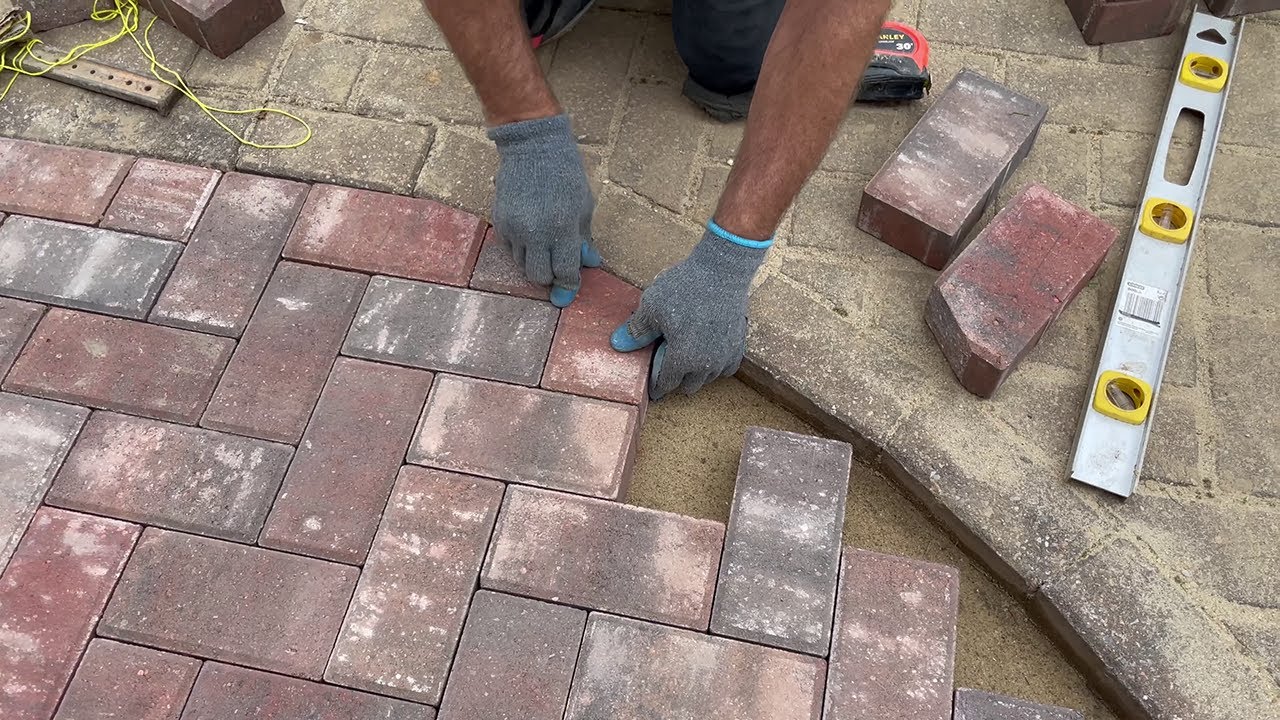
I use geogrid readily where a driveway ends at a garage piece. That area sees the highest stopping forces and the best danger of bed linen sand displacement. If you have actually ever before gone back to a jobsite a year later and found the bottom 2 training courses of pavers tight yet the leading training course at the garage open by a quarter inch, you have actually seen what geogrid might have prevented.
Bedding layers that remain put
Traditional bed linen sand, approximately one inch thick, services gentle qualities when water management is strong and the base is limited. On steeper inclines, bed linen can move. 2 options solve this. The very first is a cement-modified bed linen layer. Blend a tiny percentage of cement into the bed linen sand or utilize a manufactured bed linens mix, screed customarily, place pavers quickly, and compact. Lightly haze to hydrate without cleaning the fines. The layer establishes company over a day or two and stands up to movement.
The secondly is an open-graded bed linens layer, commonly 3/8 inch tidy stone. This couple with open-graded bases in absorptive systems. The interlock occurs in the stone matrix rather than a sand film. On a slope where you bother with washout, it is a strong option. The joints get filled with clean rock as well, which alters surface area actions during tornados and in winter.
Screeding on a slope without chasing after rails
On level job, screed rails are quickly. On an incline, rails like to stroll. I pin my own to the base with spikes with hardwood or steel pipes, but I still examine every pass with a level and tale pole. Screed from the low point up so you do not bulldoze material downhill. Watch that your one-inch bed linen thickness does not slim near the bottom and fatten at the top. That occurs undetectably when your screed board experiences the grade. A few set depth checks across the area keep you honest.
For long drives with a substance pitch, break the work into lanes, completing and condensing each lane prior to opening up the next. That strategy lowers foot website traffic on fresh bed linens and avoids ruts that turn up later as worked out strips.
Edge restraint that makes respect
Edges lug the battle against creep. The staple plastic side restraint with spikes works with level strolls and light qualities if the spikes bite well into dense base. On a slope, particularly at the low side and at a garage interface, I prefer concrete side beams. A haunched concrete toe hidden versus the outdoors program, with rock or rebar where dirts are weak, holds like a visual. Where plastic side is used, rise spike size and spacing, and bed the side in a thin mortar or supported sand to prevent wiggle.
If a driveway connections into a concrete driveway or garage slab, connect both with a straight saw cut and a band of pavers set versus a strong visual or soldier program secured mortar. The concrete component after that serves as a fixed side. If a public walkway fulfills the driveway apron, regard the town's standard. Several call for a continual concrete apron at the access. In those situations, transition the paver area to that apron with a large band to absorb tiny movements.
Laying patterns that resist movement
Herringbone, either 45 or 90 degrees to the centerline, stays the greatest pattern for lorry tons and slopes. It spreads out force in numerous instructions and resists shear along the quality. Pile bond and running bond look tidy, but they create lines that want to unzip under stopping. If a client demands a linear appearance, I will enhance that location with a herringbone area where the quality steepens, usually disguised with a contrasting band.
Curves complicate issues on slopes. Use reduced systems to preserve bond, avoid slim slivers on the downhill side, and keep joints under 1/8 inch on conventional systems. The feel under a tire tells the tale. Limited joints and a crisp bond feel strong. Gappy work really feels chattery and will just worsen as website traffic finds weak spots.
Jointing sand, polymeric, and open joints
Polymeric joint sand has enhanced and can help on slopes by securing the joint surface area. It is not a structural grout, so do not anticipate it to hold a stopping working base together. If you utilize it, pay attention to cleansing and activation water. On a slope, rinse water wishes to run downhill, carrying polymers with it. Work in little areas from all-time low up, and make use of just enough water to cause healing without washing.
For absorptive systems, joint stone is your friend, and washdown is a non-issue. Compact after first fill, top up joints, then compact again. On lengthy slopes, you may see rock clear up farther than on level work as it discovers its place. A 3rd pass of top up prevails prior to last cleanup.
Managing water: drains pipes, swales, and absorptive choices
The ideal slope jobs I have actually seen treat water as a design component, not an afterthought. A regular cross incline towards a trench drain at the garage apron keeps interiors completely dry. A shallow swale along the low edge, combined into planting beds, moves water to a daytime electrical outlet. If you connect right into a community visual, verify whether a visual cut is permitted, or plan an on-site soakaway.
Permeable pavers make their position on slopes where runoff guidelines are limited, or where a driveway sits between a hillside and a home. They do not remove flow on a high grade, however they lower quantity and optimal rate by saving water in the open-graded base. A general rule is that storage capability is approximately 30 to 40 percent of the base volume. If the driveway is 12 feet wide and 40 feet long, with a 12 inch open-graded base, you hold on the order of 120 to 160 cubic feet of water prior to overflow. That is often sufficient to take the edge off a storm so downstream attributes can handle the rest.
Climate and freeze-thaw realities
Cold regions make slopes a lot more requiring. Water races downhill, collects at the toe, and ices up. Use pavers that fulfill ASTM C936 or CSA requirements with low absorption and ample compressive toughness. Maintain joints tight. Avoid deicers that strike cement in polymeric sands. If you anticipate heavy salting, an additional point for permeable assemblies, given that salt can pass down rather than staying on the surface area where it can concentrate and refreeze.
Frost heave commonly turns up at the uphill side where dirt stays wetter. Added attention to drain and splitting up geotextiles there pays off. I likewise allow a little bit extra base depth throughout the leading third of a high driveway, not due to the fact that the tons are higher, yet because that region never ever gain from drying out like the sunny bottom.
Transitions that do not telegraph stress
The last three feet at a garage door should have special consideration. Maintain the last training course completely alongside the limit and lock it with a soldier or seafarer course. If you have space, go down a slim trench drainpipe just outside the door, flush with the paver surface, so the apron stays bone completely dry. Braking forces and freeze cycles concentrate at this joint. When it is developed like a mini aesthetic system, it stays tight.
At the street, a curb return might turn your apron. Shape that geometry in the base, not the bed linen sand. If the community calls for a concrete apron, do not battle it. Treat it as a fixed edge and construct your last field training course to end up just proud of the apron, then compact to a flush line.
Walkways on inclines: convenience and control
Walkways forgive more, yet they also call for convenience. Joggers and guests notice uneven pitch. Maintain running incline sensible, break long surges with generous landings, and include actions where grade goes beyond comfy limitations. I such as a 1 to 2 percent crossfall on strolls so water leaves the surface, yet I never ever tilt them towards a drop without a visual. A simple increased side training course on the reduced side becomes both a restriction and a guard.
For Walkway Paving Installment that contours throughout a slope, a soldier training course on both edges calms the geometry and has little cut items from the field. Consider shoes in winter season. Little format pavers with textured faces include grip without coming to be ankle grabbers.
Safety and hosting on the job
Working on a slope multiplies dangers. Devices slide, pallets change, and a plate compactor can get away from you. Stage pallets on top, not the bottom, so you are not dragging packages uphill. Maintain paths tidy of loosened bed linens or stone. Wedges under screed pipelines, risks via lumber rails, and a disciplined clean-up at the end of each day protect against shock changes overnight, specifically prior to a rain.
Common mistakes I see and how to stay clear of them
A couple of errors show up over and over. Bed linen sand that is as well thick on top of the slope and as well thin at the bottom. Side restraint spiked right into uncompacted base that wiggles over time. Patterns that welcome shear along the grade. Drains pipes that sit too expensive by a fifty percent inch, producing a moat rather than a catch factor. Each is avoidable with a string line, a degree, and the self-control to measure as you go, not after.
A fast incline analysis you can do on day one
- Identify low and high control points, then verify the garage threshold and street or walkway elevation with a level. Decide on cross incline instructions and price, frequently 1 to 2 percent, and sketch the water drainage path to a clear outlet. Probe the subgrade at a few areas to discover dirt type and moisture, after that prepare for geotextile or geogrid if needed. Choose base kind dense rated, open rated, or crossbreed based on drain objectives and climate, then set a target density by zone. Select a laying pattern with sufficient interlock for the quality, normally herringbone, and plan edge restriction information at the important edges.
Step by action: constructing a steady base upon a sloped driveway
- Excavate to subgrade that mirrors the scheduled coating aircrafts, benching the slope in steps to prevent sliding. Place geotextile over fine dirts, after that mount the first lift of base, compacting from the bottom up in thin layers. Introduce geogrid at recommended altitudes on steeper qualities or near braking areas, overlapping properly towards slope. Shape cross slope right into the compressed base, not the bed linen layer, checking with a laser or string at normal intervals. Screed a consistent bed linen layer, established pavers in a solid pattern, compact with a plate compactor, then set up and activate joint product from the lower up.
Maintenance and long-term performance
A well built sloped driveway does not demand a lot, yet it values treatment. Blow debris off regularly so rain gutters and trench drains pipes keep functioning. Leading up polymeric joints where sunshine and web traffic use them slim, typically after a couple of periods. If the low side creates a weed line, it commonly signifies water lingering there. Readjust grading or add an outlet as opposed to chasing after plants. After major freeze-thaw winters months, walk the leading training course at the garage and the low side, paying attention for hollow sounds under compaction. Early intervention, even if it is simply pulling and passing on a few programs, maintains the interlock of the residential retaining walls Walnut Creek entire field.
Permeable systems have their own rhythm. They need periodic vacuuming or stress cleaning to recover infiltration. On slopes with trees above, an autumn cleaning keeps organics from securing the surface area. When maintained, the open-graded base keeps doing its silent job, alleviating storm tons and keeping bed linens from migrating.
A short instance from the field
A hill job I remember well had a 9 percent driveway that flared at the road and fell towards a three-car garage. The original asphalt had alligator splits and a perennial puddle at the left bay. We rebuilt with an open-graded subbase 12 inches deep, a 4 inch dense graded cap, and a 1 inch cement-stabilized bedding layer. Herringbone field, soldier training course edges, concrete haunch on the low side, and a trench drainpipe linked to a completely dry well near the front grass. We added one layer of geogrid throughout the top third.
Five winter seasons later on, that top training course is still limited versus the door, and the left bay stays dry throughout tornados that made use of to flood it. The owners observe none of the parts we consumed over. They see they can park, walk, and roll containers without a doubt. That is the point.
When to go absorptive and when to stay conventional
If your site drains toward a house or downhill next-door neighbor, or if local guidelines restrict impervious location, an absorptive assembly is tough to defeat. It regulates water at the resource and secures the bed linens layer from washout on inclines. If soils are hefty clay with bad infiltration, you can still go permeable, however you will certainly need an underdrain and a safe overflow. Conventional thick graded systems radiate where subsoils drain pipes well and where snow elimination and deicing are constant, since the sealed joints keep penalties out and maintenance is simpler. Both systems can carry out on inclines when created thoughtfully.
The judgment calls that different excellent from great
Great slope job commonly boils down to tiny options: making a decision to pitch water away from the house also if it means a somewhat taller action at the porch, picking a herringbone that does not match the next-door neighbor's running bond yet will look better in 10 years, including geogrid not because a formula required it, but because your intestine says the hill and the vehicle driver's behaviors will check the side. Experience instructs that a slope multiplies both imperfections and staminas. If you offer water a tidy path, if you construct a base that behaves like one item, and if you lock the sides, the paver surface area on the top turns into the finish it was indicated to be.
Interlocking pavers reward cautious hands. On a slope, they compensate planning a lot more. Whether the task is a sloped Driveway Paving Installment that satisfies a garage without dramatization, or a Sidewalk Paving Installment that lugs guests up a mild surge without a slip, the exact same concepts hold. Respect water, withstand shear, and measure more than you presume. The remainder is craft.